
Your Best PR Asset Might Already Be Sitting in Your Marketing Folder
Marketing assets like b-roll footage, product demos, and facility photography are often exactly what journalists need to tell a visual story, but most companies don’t realize their existing marketing work can be repurposed for earned media. When marketing and PR coordinate around a shared story, the footage captured for a website or sales deck can become the visual layer of a news segment. The key is knowing what your story is, so every asset pulls in the same direction.
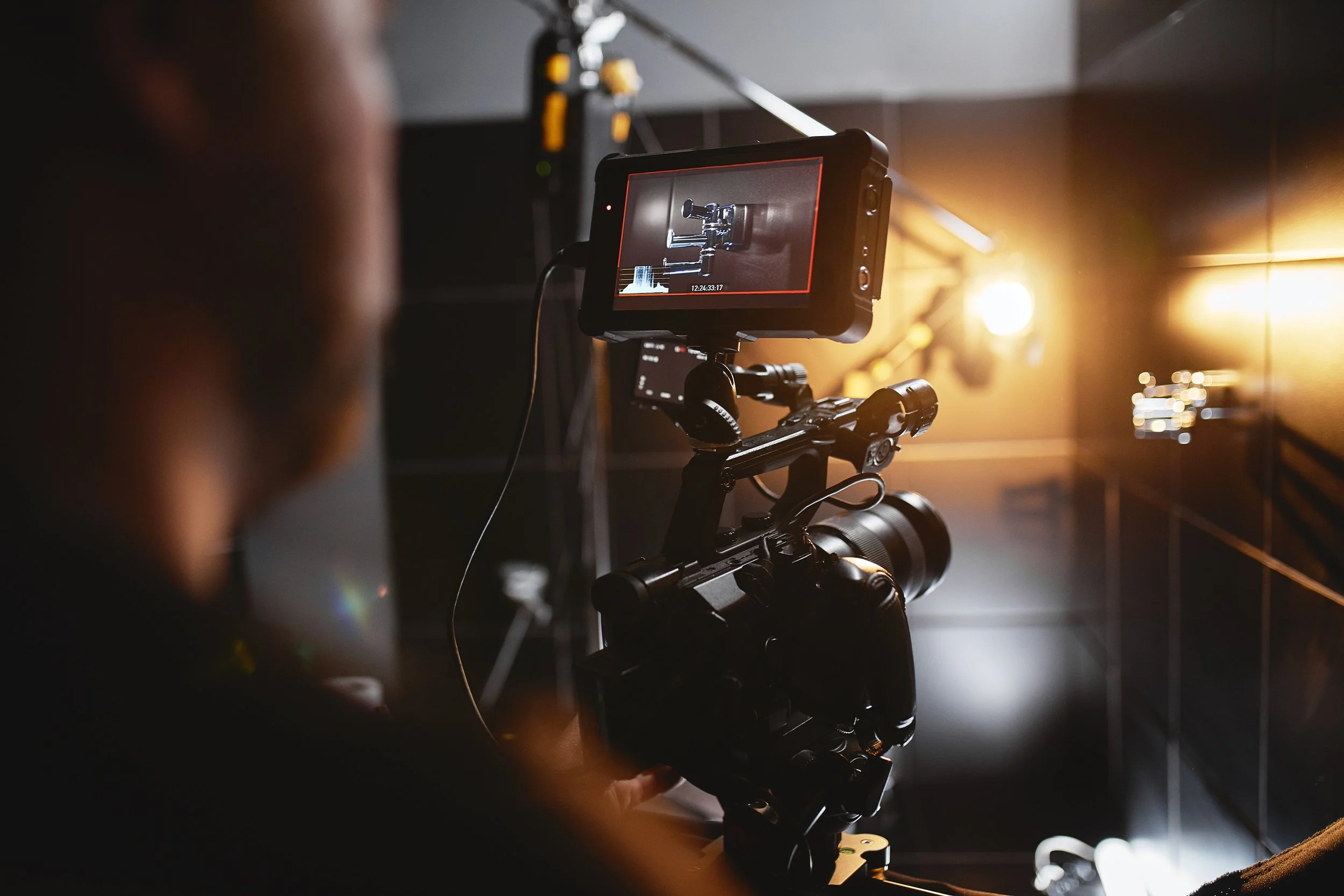
The footage you’re already capturing may be exactly what a newsroom needs.
Your marketing team is already doing work that could help you land a great news story, but you likely haven’t been shown how.
The marketing assets you’re capturing for your website, your sales deck, your social channels — product demos, your facilities, your team — are often exactly what a journalist needs to tell a visual story about your business. It’s possible that you’re sitting on an untapped PR gold mine for your company, but if marketing and PR aren’t working together, there’s a lot of missed opportunity.
However, when PR and marketing are working from the same playbook, the assets built for one purpose have a way of doing double duty. And the companies that figure that out tend to get better coverage with less scrambling.
B-roll is supplemental footage — facility shots, people at work, processes in motion — that reporters and editors use to build the visual layer of a story around an interview or narration. For broadcast coverage, it’s often the difference between a segment that airs and one that doesn’t.
What reporters actually need
When a journalist agrees to cover your company, they’re not just writing. Even traditional print outlets are building a visual story, and they need assets to create it with. For broadcast media especially, b-roll footage is essential. It’s what runs while the anchor or reporter narrates, and it’s what turns a segment from a talking head into something a viewer can actually see and feel.
Reporters often prefer to gather their own visuals, but schedules are tight, crews are limited, and facilities aren’t always easy to access (if you have a facility with a lot of confidential, proprietary equipment or processes, you likely want to control exactly what makes it onto camera). When a company has clean, usable footage ready to share, it removes a barrier, and makes it easier for a journalist to say yes.
If you’re not in the habit of thinking about PR, you probably don’t realize that the footage your marketing team already captured for your website, your sales materials, or your social channels may be exactly what a newsroom needs. Not always. But more often than you’d think.
When marketing and PR work as a team
A few years ago, I was pitching a Fort Worth client to our local NBC affiliate. It took nearly a year of targeted, relationship-driven pitching before the timing was right — but when it was, we were ready.
The segment came together the way the best ones do: marketing had already built a library of assets showcasing how the service worked: multiple angles, real people, and authentic activity. They captured it for their own marketing and sales purposes, like product demos, their website, and sales conversations. But when the reporter needed clean, usable b-roll, it was there.
The PR team didn’t build those assets. Marketing did. But because we were working together, we knew they existed, and we knew how to put them in a reporter’s hands.
The result was a segment so good and so on-brand that could have passed for a 90-second paid ad. Except it wasn’t; it was earned media, which carries far more weight with viewers.
What makes marketing assets media-ready
Not every marketing asset translates directly to a newsroom, and knowing the difference ahead of time is where the opportunity lives.
Slow motion and heavy stylization work beautifully in a social reel. However, for broadcast editors on deadline, they’re limiting. Embedded music creates licensing issues. Watermarks and on-screen text have to be removed, but often can’t be. And clips under five seconds don’t leave enough room to edit.
The assets most likely to cross over are the ones captured with variety and authenticity:
wide shots that establish context
medium shots that show activity
tight detail shots that add texture
people doing real work, not posing for the camera
well-lit, stable footage that gives an editor options
If your marketing team is already capturing content and you want it to do double duty for media, loop in your PR partner early. A little coordination at the shoot stage can make the difference between footage that’s useful everywhere versus footage that’s useful in one place.
Preparation is the other half
Assets are just one part of a successful media moment. The other is preparation.
In that same segment, our interviewee had been through media training before, and we took her through it again the day before. We reviewed:
talking points
do’s and don’ts
lighting check on Zoom
even a conversation about what she’d wear.
When she sat down for the interview, she was ready, confident, clear, and on message.
That preparation doesn’t happen the morning of. It happens in the weeks before, when PR and marketing are aligned on the story, the spokesperson is practiced, and the assets are in order.
The bottom line
Earned media isn’t luck; it’s the result of relationships built over time, pitches that land at the right moment, and a team that’s organized enough to make a reporter’s job easier when that moment arrives.
But coordination alone isn’t the whole picture. Knowing which assets matter — and which media moments are worth pursuing — starts with knowing what your story actually is. When you’ve found The Thread™ running through your business, everything else gets clearer: the footage you capture, the pitches you make, and the moments you say yes to. The assets your marketing team are building stop being a folder of clips and start being in service of something that moves your business forward.
That’s the work we do. We find the story at the center of your business, then help every asset, pitch, and moment pull in the same direction.
Frequently Asked Questions
Can marketing footage be used for media coverage?
Often, yes. Footage captured for a website, sales deck, or social channel can work for earned media if it’s clean, stable, and shot with variety. The key is coordinating with your PR partner early so the footage is captured in a media-ready way from the start.
What makes b-roll usable for newsrooms?
Editors need clean, flexible footage: stable shots, natural color, ambient sound only, and clips of 10 to 15 seconds. Variety matters, too: wide, medium, and detail shots give an editor room to build a story.
Why doesn’t social media footage always work for broadcast?
Social footage often includes slow motion, embedded music, on-screen text, or heavy color grading. Those choices look great in a reel but create licensing and editing problems for a newsroom on deadline.
How should companies share b-roll with journalists?
Send footage through a downloadable cloud link rather than an email attachment, label files clearly, and include a shot list describing each clip. Confirm everyone on camera has a signed media release first.
Want the technical checklist our team uses? Tell us where to send it and we’ll drop the full b-roll spec sheet in your inbox: resolution, format, file naming, and delivery, all in one easy to reference place.

About The Author
Lauren Kwedar Cockerell is founder and president of Kwedar & Co, a Fort Worth-based PR, messaging, and strategic communications firm serving purpose-driven B2B companies. She is also the firm’s lead PR and marketing strategist, host of our podcast The Impatient Entrepreneur, as well as a frequent podcast guest.
Over the past 20+ years, she has worked with 100s of leaders and organizations to create PR and marketing strategies and tactics that support visions and reach goals.
To connect with Lauren, please book a consultation.