
Why Your Story Needs Development (Not Just Documentation)
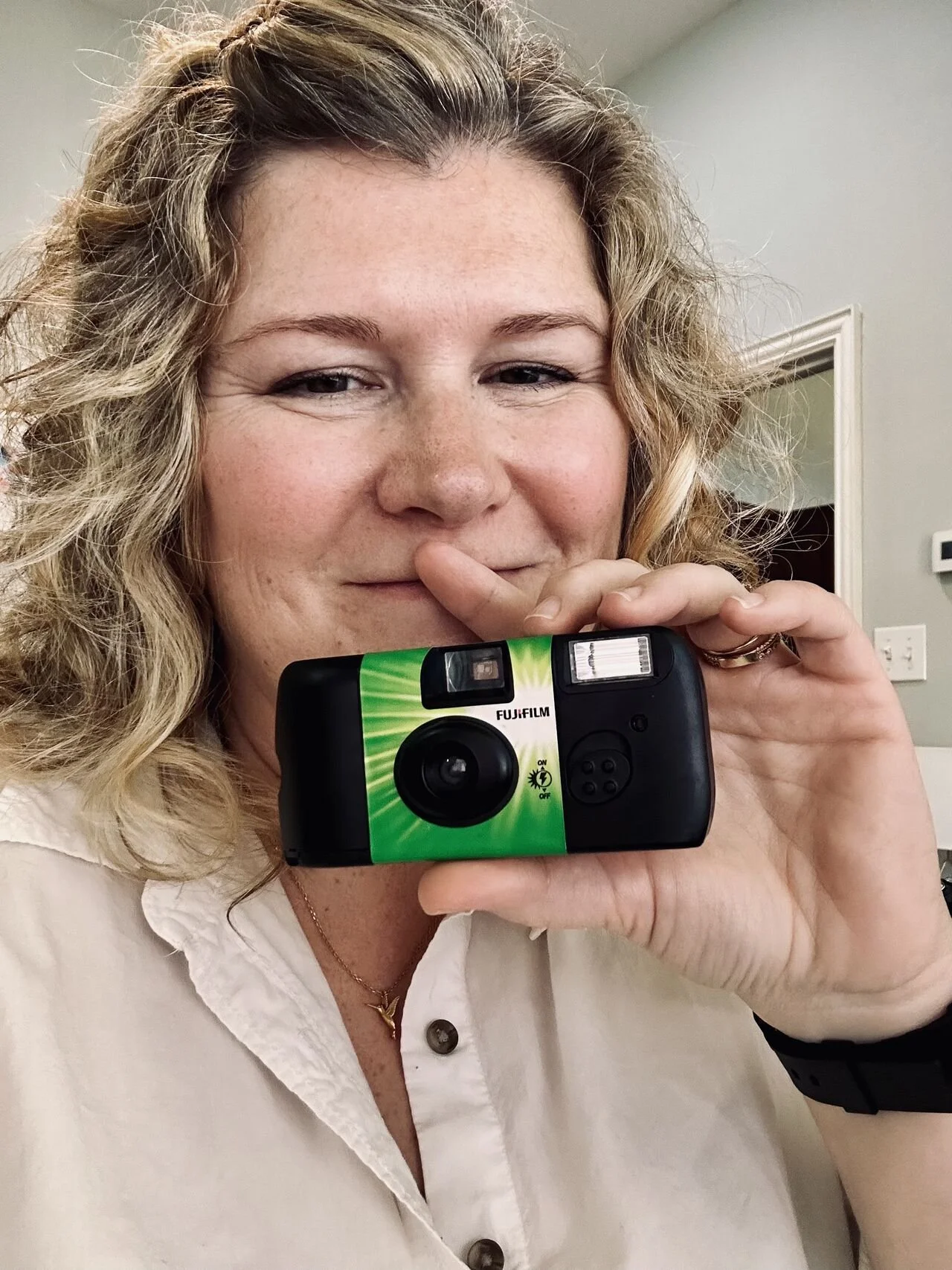
"Mom, I got it down to zero! Please get the pictures out."
My 7-year-old handed me his disposable camera last night with the kind of pride that only comes from completing a very important mission.
First, let me just say that explaining how disposable cameras work to a child in 2025 made me feel approximately one billion years old.
Second, this whole interaction reminded me so much of the work we do with B2B leaders every single day.
You've Already Captured Something
Here's what I see constantly: Manufacturing executives who've built innovative processes that are transforming their industry. Professional services leaders who've cracked the code on problems their competitors can't solve. Energy tech founders who are literally building the future.
You've captured something remarkable. The innovation is there. The differentiation is real. The impact is measurable.
But like my son's disposable camera, what you've captured hasn't been developed yet. It's not something you can see clearly, share confidently, or use to its full potential.
And here's the thing—you're too busy actually running the business to worry about the development process.
The Difference Between Capturing and Developing
When my son took those photos, he captured moments. Life at summer camp. Breakfast on a Tuesday. His sister making a face.
But until those images were developed, they were just potential. Latent. Inaccessible.
Your business story works the same way.
You've captured the innovation—you're doing the work every day. You've captured the differentiation—you know what makes you different from competitors. You've captured the value—your clients see results.
But has that story been developed in a way that:
Your sales team can articulate clearly and consistently?
Your ideal prospects immediately understand and connect with?
The media finds compelling enough to cover?
Your own leadership team rallies around?
Most B2B companies are sitting on incredible stories that have never been properly developed.
Why B2B Leaders Struggle With Story Development
In over 20 years of working with manufacturing, professional services, and energy tech companies, I've seen the same pattern over and over.
You're experts in what you do, not in how to talk about it.
The manufacturing CEO who can explain a complex production process in excruciating technical detail struggles to articulate why a prospect should choose them over the competition.
The professional services partner who's built a practice around a proprietary methodology can't quite distill it into language that makes a prospect say "that's exactly what we need."
The energy tech founder who's solving a critical infrastructure problem gets so deep in the technical weeds that the compelling human story gets lost entirely.
This isn't a failure. It's just not your job.
Your job is to run the business. To innovate. To serve clients. To lead your team. To make a thousand decisions a day that keep everything moving forward.
Developing your story? That requires different expertise, dedicated time, and an outside perspective you simply don't have when you're in the thick of operations.
What "Story Development" Actually Means
Let me be clear about what I mean by story development, because it's not what most people think.
It's not writing some website copy or creating a brochure.
It's not documenting what you do in a prettier format.
Story development is the strategic work of:
Excavating what makes you genuinely different. Not just "we have great customer service" or "we're innovative" (everyone says that), but the specific, defensible, meaningful ways you create value that your competitors can't replicate.
Translating technical complexity into compelling narrative. Your prospects don't need to understand every technical detail to understand why it matters to them. The bridge between "what you do" and "why they should care" is where most B2B marketing dies.
Creating a through-line that connects across every touchpoint. Your story shouldn't change depending on whether someone talks to your sales team, visits your website, reads your LinkedIn, or sees your press coverage. Consistency builds credibility.
Making it repeatable and scalable. A good story isn't just something you can tell once. It's something your entire team can tell, in their own words, that lands the same way every time.
The Trust Factor
Here's what struck me about my son handing over his camera: complete trust.
He didn't worry about whether I knew how to get the pictures developed. He didn't ask to oversee the process. He didn't second-guess whether I'd do it right.
He just trusted me to handle something important to him with care.
This is exactly the kind of partnership B2B leaders need when it comes to their story.
You need someone who:
Understands the strategic weight of getting this right
Has the expertise to do it well
Can handle it without requiring your constant oversight
Treats your story with the care it deserves
Because here's the reality: you don't have time to become an expert in strategic communications on top of everything else you're doing. And you shouldn't have to.
When Story Development Actually Matters
Not every company needs to invest in developing their story right now. If you're in pure startup mode just trying to get product-market fit, you've got other priorities.
But if you're experiencing any of these situations, story development isn't optional anymore:
You're ready to scale. Growth requires a message that travels without you in the room. Your sales team, your partners, your advocates all need to be able to tell your story clearly and consistently.
You're losing deals to competitors who shouldn't be winning. If prospects are choosing competitors that you know aren't better—just better at telling their story—that's a development problem, not a product problem.
Your team struggles to explain what you do. If there's no consistent narrative across your organization, prospects are getting mixed messages. Confusion costs you deals.
You're launching something new. Whether it's a new service line, entering a new market, or repositioning the entire company, you need a developed story before you go to market, not after.
You're invisible to the media and your industry. If competitors are getting press coverage and speaking opportunities while you're being overlooked, it's often because their story is more clearly developed and easily understood.
The "Second Grader Moment"
You know what happened when my son saw his developed photos?
Pure joy. Genuine excitement. "Wait, I made this? This is REAL?"
That's the feeling we're after when we develop a client's story.
The manufacturing CEO who finally hears their sales team articulate the value proposition perfectly, without coaching.
The professional services partner who watches a prospect's face light up with "oh, THAT'S what you do" clarity.
The energy tech founder who sees their story covered in industry press for the first time, positioned exactly the way they'd hoped.
That moment of "this is real, this is working, people finally get it"—that's what proper story development creates.
You've Got Bigger Fish to Fry
Here's what I know about the leaders we work with in manufacturing, professional services, and energy tech:
You're running complex operations. Managing teams. Navigating industry changes. Solving problems that didn't exist five years ago. Making decisions that impact your employees, your clients, your community.
You don't have time to also become an expert in strategic communications.
You need a partner you can hand your metaphorical camera to and trust they'll develop what you've captured into something clear, compelling, and ready to use.
Someone who understands your industry well enough to translate it. Someone who can excavate the story that's been there all along. Someone who treats your business with the care it deserves.
That's what we do. We develop stories for purpose-driven B2B leaders in manufacturing, professional services, and energy tech who are ready to stop being the best-kept secret in their industry.
If you're ready to see your story fully developed—to experience that "second grader moment" of seeing what you've built turned into something you can actually use—let's talk.
You've already captured something remarkable. Let's develop it together.
Ready to develop your story? Schedule a conversation to talk about how we help B2B leaders in manufacturing, professional services, and energy tech tell their stories like they've never been told before.

About The Author
Lauren Kwedar Cockerell is founder and president of Kwedar & Co. She is also the firm’s lead PR and marketing strategist, host of our podcast The Impatient Entrepreneur, and is a frequent podcast guest.
Over the past 20+ years, she has worked with 100s of leaders and organizations to create PR and marketing strategies and tactics that support visions and reach goals.
To connect with Lauren, please send an email above, or book a consultation.